Foghe: A Display Font That Brings Vintage Charm to Modern Design
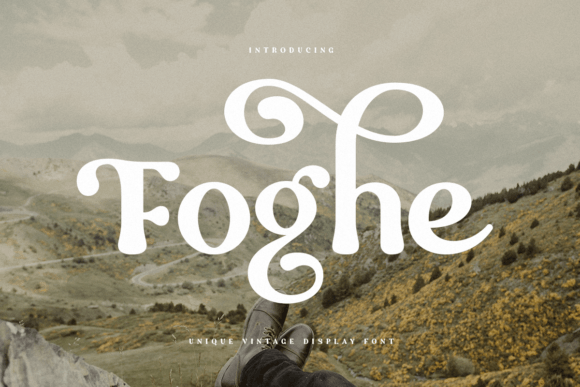
There's something undeniably magnetic about typography that carries a sense of history. You've seen it on movie posters, classic album covers, and the packaging of artisanal goods—the kind of lettering that makes you stop and look twice. Foghe is a display font that taps directly into that feeling. It's bold, it's distinctive, and it walks the line between retro flair and contemporary clarity in a way that feels both fresh and familiar.
If you've been searching for a typeface that gives your work personality without sacrificing readability, this might be the creative asset you didn't know you needed.
What Makes Foghe Stand Out in a Crowded Font Market
Foghe isn't trying to be everything to everyone, and that's precisely its strength. As a premium display typeface, it leans into a slightly retro aesthetic—think mid-century signage, vintage travel posters, and the kind of bold, confident lettering you'd find on a 1960s book jacket. The letterforms have weight and presence, with subtle curves and distinctive details that give each character its own personality.
What separates a good display font from a forgettable one is often the small stuff: the way a serif terminates, the rhythm between letters, the balance of thick and thin strokes. Foghe gets these details right. It doesn't feel like a generic retro filter applied to basic shapes. Instead, it reads as a carefully crafted typeface with intention behind every glyph.
For designers who work across multiple mediums—from digital screens to printed materials—having a font that translates well is critical. Foghe holds its own whether it's rendered at 72 pixels on a website banner or blown up across a 24-by-36-inch poster.
Where This Typeface Really Shines: Practical Applications
The beauty of a well-made display font is its versatility within a specific lane. Foghe isn't meant for body text or long-form reading—it's built for impact. Here's where it tends to perform best:
- Logo design and brand identity: If you're building a brand that wants to communicate heritage, craftsmanship, or a playful sense of nostalgia, Foghe gives you a strong starting point. It pairs especially well with simpler sans serif fonts for contrast.
- Packaging design: Think coffee bags, craft beer labels, boutique skincare products, or specialty food items. The vintage elegance of this typeface immediately signals quality and care.
- Posters and editorial layouts: Whether it's a music event, a gallery exhibition, or a magazine cover, Foghe commands attention without feeling aggressive.
- Social media graphics: Bold, distinctive typography performs well on platforms where you have roughly two seconds to grab someone's attention. A headline set in Foghe can stop the scroll.
- Invitations and stationery: Wedding invitations, event announcements, and greeting cards benefit from typefaces that feel special and intentional.
- Merchandise and apparel: Tote bags, t-shirts, mugs—products where typography itself becomes the design element.
- Websites and blogs: Used sparingly for headlines, page titles, or hero sections, Foghe can give a site a distinctive visual voice.
- Digital products and marketing assets: E-book covers, lead magnets, email headers, and ad creatives all benefit from a font that feels polished and purposeful.
Matching Typography to Your Project Goals
Choosing the right font isn't just about what looks good in isolation—it's about what serves the project. Before committing to any typeface, including Foghe, it helps to ask a few practical questions:
- What's the mood? Foghe leans nostalgic and confident. If your brand or project is ultra-minimalist or aggressively futuristic, it might not be the right fit. But if there's warmth, authenticity, or a sense of story involved, it's worth exploring.
- Who's the audience? Adults in their 20s to 50s tend to respond well to retro-inspired design, especially when it's executed with modern sensibility. If your audience appreciates craft, tradition, or creative expression, this typeface will resonate.
- What's the medium? Display fonts like Foghe work best at larger sizes. For body copy, you'll want to pair it with a clean serif font or a readable sans serif typeface that handles small text gracefully.
- How does it pair? Never judge a font in isolation. Set Foghe alongside your body text options and see how they interact. The contrast between a bold, characterful display font and a neutral text font often creates the most professional results.
Building Visual Consistency and Brand Recognition
One of the most overlooked aspects of branding is typographic consistency. When a business uses the same typeface—or a carefully selected set of fonts—across every touchpoint, it builds recognition. Customers start to associate that visual language with the brand itself.
Foghe can serve as the cornerstone of a brand's typographic system. Use it for your logo, your packaging headlines, your social media title treatments, and your print advertising. Then pair it with a complementary typeface for supporting text. Over time, that combination becomes synonymous with your brand's identity.
This kind of visual consistency doesn't just look professional—it builds trust. When a customer sees your materials and immediately knows it's you before reading a single word, you've achieved something powerful.
Practical Tips for Getting the Most Out of Foghe
Like any design asset, a font performs best when you understand its strengths and limitations. Here are a few recommendations based on real-world use:
- Test at multiple sizes. A font that looks stunning at 48pt might lose its charm at 18pt. Make sure Foghe works at the sizes you'll actually use.
- Review the full character set. Check for ligatures, alternate characters, numerals, and special symbols. A well-equipped typeface gives you more creative flexibility.
- Consider spacing and kerning. Display fonts often benefit from manual kerning adjustments, especially in logos and large headlines. Don't rely solely on default spacing.
- Check the licensing. If you're using Foghe for commercial projects—client work, products for sale, or paid marketing materials—make sure your license covers that use. Most premium fonts offer clear commercial licensing, but it's always worth confirming.
- Don't overuse it. A bold display font loses its impact when it's everywhere. Use Foghe where it matters most—headlines, logos, hero text—and let quieter typography handle the rest.
The Role of Creative Fonts in Modern Design Work
We live in a visual culture. The typography you choose communicates before your audience reads a single word. A font like Foghe doesn't just display text—it sets a tone, evokes an era, and tells a story through its very form.
For small business owners building their first brand identity, content creators developing a visual signature, or designers curating a library of reliable typefaces, having a few distinctive display fonts on hand makes a real difference. It's the difference between materials that feel generic and materials that feel crafted.
Foghe occupies a specific and valuable niche: it's retro without being kitschy, bold without being loud, and distinctive without being illegible. That balance is harder to achieve than it sounds, and it's what makes this typeface a worthwhile addition to any designer's toolkit.
The next time you're staring at a blank canvas wondering how to give your project that extra layer of personality, consider reaching for a typeface with character. Sometimes the right letterforms are all it takes to transform good design into something memorable.