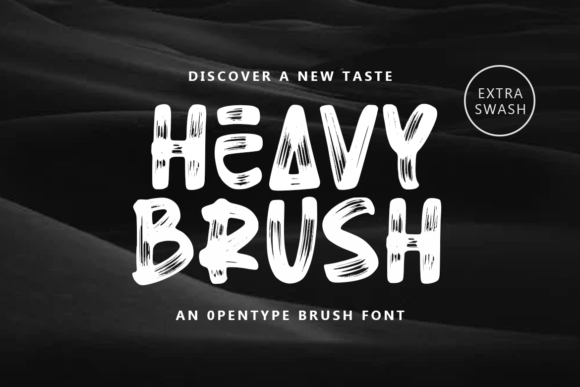
Heavy Brush: The Display Font with Street-Smart Style
Sometimes a design calls for something that doesn't just sit politely on the page—it needs to grab attention, make a statement, and carry a bit of attitude. If you've ever worked on a project aimed at a younger, urban audience or one that thrives on bold, energetic visuals, you know that the typography choice can make or break the vibe. That's where a typeface like Heavy Brush enters the conversation. It's not a font for legal disclaimers or body text in a novel. It's a specialized tool, a cool and bold display font built for impact. Ideal for urban or street designs, this font will instantly make your creations look catchy and trendy, serving a very specific and valuable role in a designer's toolkit.
Understanding the Visual Punch of a Brush Font
At its core, Heavy Brush is a display font, meaning its primary job is to be seen at larger sizes, like headlines, logos, and posters. What defines its personality is the "brush" aspect. This isn't a clean, geometric sans serif or a classic serif with sharp serifs. Instead, its letterforms mimic the organic, textured strokes of a paintbrush or marker. You'll see slight imperfections, varying stroke widths, and a hand-crafted feel that digital precision can't replicate. This gives it an immediate sense of authenticity and raw energy. It feels human, rebellious, and full of movement. When you use it, you're not just choosing letters; you're injecting a specific mood—edgy, creative, confident, and modern—directly into your project. It's a typeface that speaks the visual language of street art, skate culture, indie music, and contemporary urban brands.
Where to Unleash This Creative Font
The real value of a premium font like this is its versatility within its niche. It's not for every project, but for the right ones, it's transformative. Think about your brand identity. If you're launching a streetwear label, a craft brewery with a bold personality, a music festival, or a fitness brand that wants to feel powerful and gritty, Heavy Brush can become the cornerstone of your visual identity. Imagine it on a logo—it immediately tells customers you're not conventional. It translates perfectly to packaging design, where it can make a product jump off the shelf, especially for items like energy drinks, artisanal hot sauces, or vinyl records.
Beyond physical products, its strength is digital. For social media graphics on Instagram or TikTok, a bold headline set in this font can stop the scroll. It works wonders for YouTube thumbnails, podcast covers, and event announcements where you need to convey excitement quickly. On a website, use it sparingly for hero section headlines or call-to-action buttons to guide the eye and establish tone, but pair it carefully with a highly readable sans serif font for body text. It's also fantastic for editorial design in magazines or blogs focused on music, art, or lifestyle, adding flair to section headers. Think merchandise like t-shirts and hats, concert posters, and even dynamic marketing assets like email banners or digital ads. The key is context: it shines in projects where the goal is to be bold, not subtle.
Making It Work: Practical Design Advice
Adopting a strong character font requires a thoughtful approach. First, always consider readability. Because of its textured, brushy nature, Heavy Brush is best for short bursts of text—a headline, a single word, a logo lockup. Avoid using it for paragraphs or small captions where clarity is paramount. A great strategy is font pairing. Combine its expressive energy with a clean, neutral companion. A simple sans serif like Montserrat or a classic serif font like Lora can provide balance, letting the display font do the talking without overwhelming the viewer. Test these pairings in your specific application to ensure they complement rather than clash.
Before you commit, review the included font styles. Does the typeface come with a full set of punctuation, numbers, and multilingual support? Are there alternate characters or ligatures that could enhance your designs? For any commercial project, commercial licensing is non-negotiable. Ensure you have the correct license for your intended use—whether it's for a client, for merchandise, or for a digital product you sell. Using fonts legally protects you and respects the work of the type designer. Finally, always mock up your designs. Place the text on a sample poster, a website header, or a product box to see how the font's personality interacts with colors, images, and layout. It's about creating a cohesive story, not just picking a cool style.
Beyond the Trend: Building Lasting Recognition
While "trendy" is in its description, the best use of a font like Heavy Brush is to leverage its trend-awareness to build something lasting. A well-executed brand identity that uses this typeface consistently across touchpoints—from the logo to the website to social posts—builds powerful brand recognition. The font becomes a visual shorthand for the brand's core attributes: energy, creativity, and a connection to contemporary urban culture. It improves visual consistency by providing a reliable, recognizable element. When used thoughtfully, it elevates the professional presentation of a project, showing that every detail, down to the typography, has been considered to resonate with the target audience. It's not about being loud for the sake of it; it's about using a creative font strategically to communicate a specific message and forge a stronger connection with the people you want to reach. In a crowded visual landscape, that kind of intentional, personality-driven design is what truly engages.