Marthias: Channeling Vintage Luxury in Modern Design
In a landscape crowded with minimalist sans-serifs and casual scripts, there's a growing appetite for typography that feels substantial, textured, and steeped in history. We're seeing it everywhere: on the labels of craft spirits, the mastheads of independent magazines, and the branding of boutique hotels. This shift isn't just a fleeting trend; it's a response to a desire for authenticity and a certain tangible quality in our increasingly digital world. It’s in this context that a typeface like Marthias truly finds its purpose, offering a bridge between the opulent past and the sophisticated present.
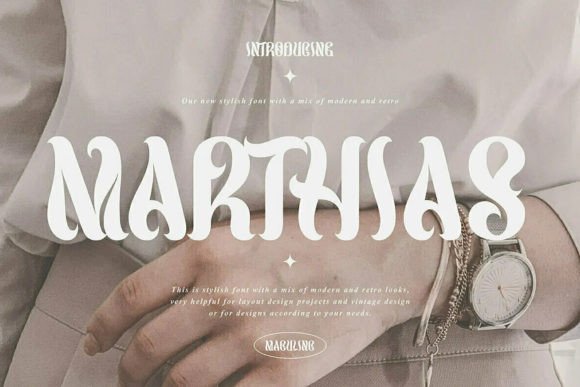
So, what exactly defines a font like Marthias? At its core, it's a retro, luxurious display typeface. Think of it not as a workhorse for body text, but as a statement piece—a typographic equivalent of a gilded mirror or an art deco chandelier. Its letterforms are bold, often featuring high contrast between thick and thin strokes, with ornate details like elegant serifs, subtle swashes, and a sense of measured grandeur. It doesn't shout; it resonates with a confident, vintage charm. This isn't a font you'd use for a user manual. Instead, it’s the perfect tool for projects where first impressions and perceived value are paramount.
Where Vintage Character Meets Contemporary Projects
Understanding a font's personality is one thing; knowing how to apply it effectively is another. The true value of a premium font like Marthias lies in its versatility across specific creative and commercial applications. Its primary strength is in high-impact, low-volume settings where you need to convey a message of quality and sophistication instantly.
For branding and logo design, this typeface can become the cornerstone of an identity for a luxury brand, a high-end consultancy, a distillery, or a bespoke tailor. It lends an immediate sense of heritage and exclusivity. Imagine a monogram for a jewelry brand or the wordmark for a classic steakhouse—Marthias provides that built-in narrative of timelessness. In packaging design, it excels on labels for gourmet foods, artisanal chocolates, or premium cosmetics, where the typography itself can suggest the quality of the product within.
Beyond physical goods, its applications in the digital and print spheres are equally compelling. Use it for:
- Event Collateral: Think wedding invitations, gala programs, or award ceremony materials where elegance is non-negotiable.
- Editorial and Publishing: Create striking chapter titles for a book, impactful pull quotes in a magazine layout, or a memorable masthead for an online publication focused on culture, travel, or style.
- Social Media and Web: While not for body copy, it's fantastic for hero section headings on a website, Instagram post titles, or the header of an email newsletter to grab attention and set a specific tone.
- Merchandise and Apparel: It can add a vintage collegiate or classic club feel to t-shirts, hats, or tote bags, especially when paired with simpler complementary fonts.
Building a Cohesive Visual Language
Using a distinctive display font like Marthias effectively requires a thoughtful approach to the entire design system. It's about creating harmony, not just using a single beautiful element. The goal is to enhance visual consistency and brand recognition by making deliberate typographic choices.
A critical step is font pairing. Because Marthias carries so much personality, it needs a partner that supports it without competing. The most successful pairings often involve a clean, neutral sans-serif (like a Helvetica, Futura, or a modern grotesque) or a simple, legible serif for body text and subheadings. This contrast creates a clear visual hierarchy: Marthias commands attention for the main headline, while its partner ensures the supporting text is easy to read. Always test your pairings in context—see how they look together on a mockup of your website or business card before finalizing.
This leads to an essential consideration: readability. As a display font, Marthias is optimized for large sizes. Using it for paragraphs or small-scale text will almost certainly harm legibility. Its ornate details can become visual noise when scaled down. Respect its role. Use it for the 5-10% of your design where impact is needed, and let a more neutral typeface handle the 90% of informational text. This practical discipline ensures your design is not only beautiful but also functional and professional.
Practical Steps for Implementation
Once you've decided a retro luxurious style fits your project, a few practical steps will ensure a smooth process. First, review the font package thoroughly. A quality premium font often includes multiple weights, styles (like italic or condensed), and extended character sets with ligatures, alternates, and multilingual support. Knowing what's available allows you to use the typeface to its full potential.
Second, always check the licensing. This is a non-negotiable part of using any commercial font. Understand whether the license covers your intended use—be it for a client's brand, print-on-demand merchandise, a mobile app, or a digital product. Reputable foundries and marketplaces provide clear licensing information, and adhering to it protects you and your clients legally.
Finally, align the font choice with your project's core goal. Ask yourself: does the vintage, opulent personality of Marthias genuinely match the message and audience of my project? For a tech startup, it might feel incongruous. For a heritage watch brand, it could be perfect. Typography is a silent ambassador for your brand's values. Choosing a typeface like Marthias is a decision to communicate tradition, luxury, and attention to detail—make sure that's the story you want to tell.
In the end, a typeface is a tool. A tool like Marthias, with its clear retro-luxury character, offers a specific and powerful way to shape perception. Used with intention and paired wisely, it becomes more than just letters on a page; it becomes an integral part of a compelling visual narrative that resonates with an audience seeking depth, elegance, and a touch of timeless grandeur in the designs they encounter.